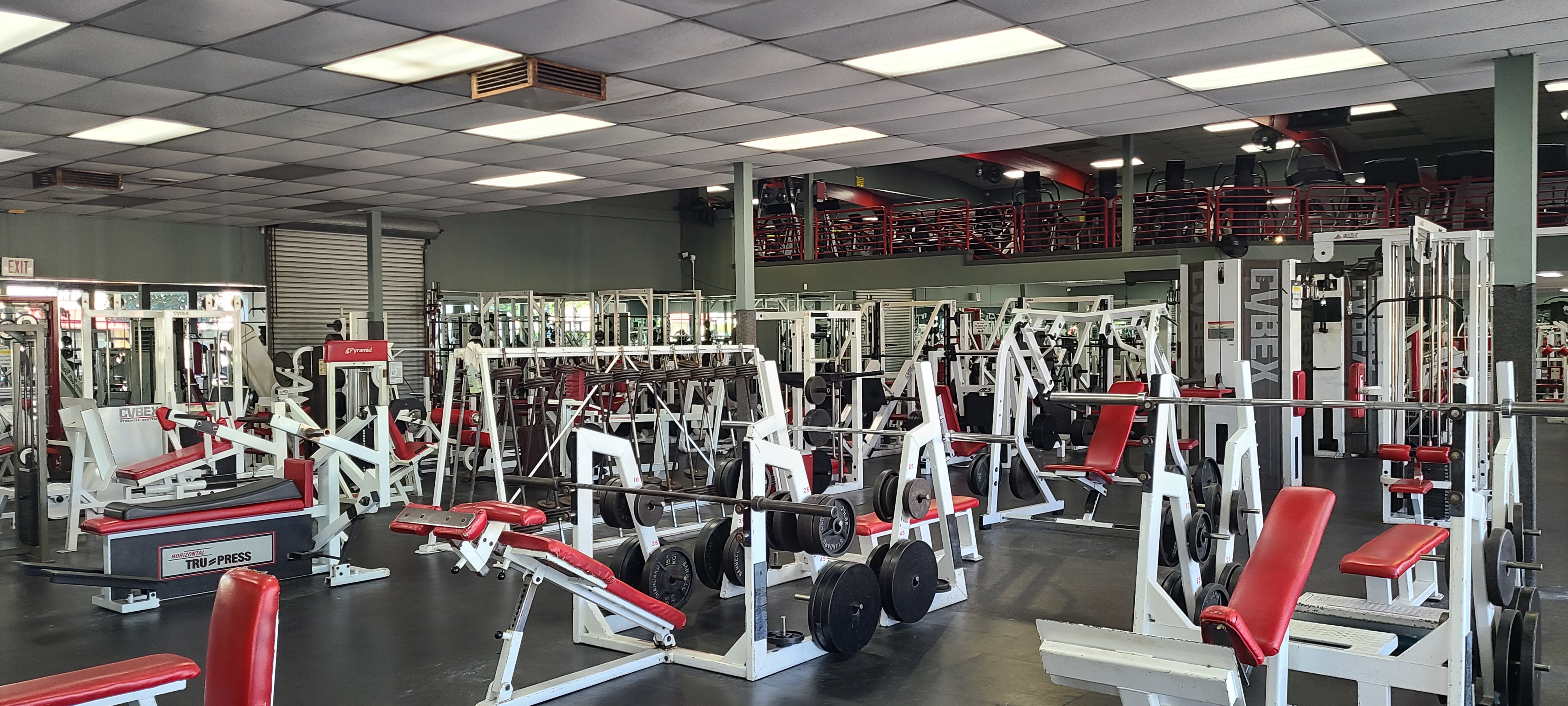
Plate Math: Load the Bar Without Guessing
Plate math is the least glamorous skill in the gym and one of the most useful. Get it wrong and you either lift less than you planned or load a bar unevenly. Get it right and you stop thinking about the plates and start thinking about the set.
The bar counts
A standard Olympic barbell weighs 45 lb or 20 kg. Some bars are lighter — 35 lb and 15 kg are common — and specialty bars can be different again. Check the end of the bar or ask before you assume. If you are using a bar you have not used before, the number stamped on it is more reliable than the number in your head.
The per-side formula
Subtract the bar weight from the target, then divide by two. That is the load for each side. For 225 lb with a 45 lb bar: 225 − 45 = 180, and 180 ÷ 2 = 90 lb per side. Ninety pounds can be two 45s, or a 45, a 35 and a 10. Load the same plates on the other side and you are done.
For 100 kg with a 20 kg bar: 100 − 20 = 80, and 80 ÷ 2 = 40 kg per side. A 25 and a 15 gets you there. This is the whole trick. The rest is plate selection.
Heaviest plate goes inside
Load the largest plates closest to the sleeve, then work outward to the smaller ones. The bar stays more stable, the sleeve stays organized, and you are less likely to run out of room. A 2.5 lb plate belongs on the outside, not buried behind a 45.
Use pairs, not one side at a time
Do not load one side completely and then walk around to the other. A bar with 180 lb on one side and nothing on the other can tip off a rack. Alternate: one plate on the left, the same plate on the right, then the next pair. It takes the same amount of time and it is dramatically safer.
Bumper plates are not heavier
Bumper plates are the same weight as iron plates of the same number, but they are larger in diameter and designed to be dropped. They are useful for deadlifts, cleans and anything that starts or ends on the floor. Do not assume a big plate is a heavy plate. Read the number.
Collars and clips
Use collars if the gym provides them. Some collars have a marked weight; if yours do, add that weight to the total. If you are not sure, ask. A pair of heavy collars can change a 225 lb bar by several pounds.
Common errors
- Forgetting the bar weight entirely.
- Calculating the total per side instead of dividing by two.
- Loading one 45 when the target needs a pair.
- Using a 2.5 when the target calls for a 5, then wondering why the bar is light.
- Changing the target after warm-up and not re-checking the math.
- Leaving the bar loaded for the next person.
Let the tool do the arithmetic
The plate loader on this site takes a target, a bar weight and a unit, then returns the plates per side. It draws the bar so you can see the stack before you touch a plate. If the target cannot be made exactly with the available plates, it tells you the remainder instead of rounding silently.
The tool is a check, not a substitute for looking at the bar. Count the plates on both sides before you lift. If the number looks wrong, it probably is.
The bar does not care what the plate looks like. It cares where the weight is.
A note on kilos
Kilo plates follow a different set: 25, 20, 15, 10, 5, 2.5 and 1.25 kg, with a 20 kg bar. Competition plates are color-coded — 25 red, 20 blue, 15 yellow, 10 green, 5 white, 2.5 black and 1.25 chrome — so you can read a loaded bar from across the room. The math is identical. Only the numbers change.